Latest Medtech News
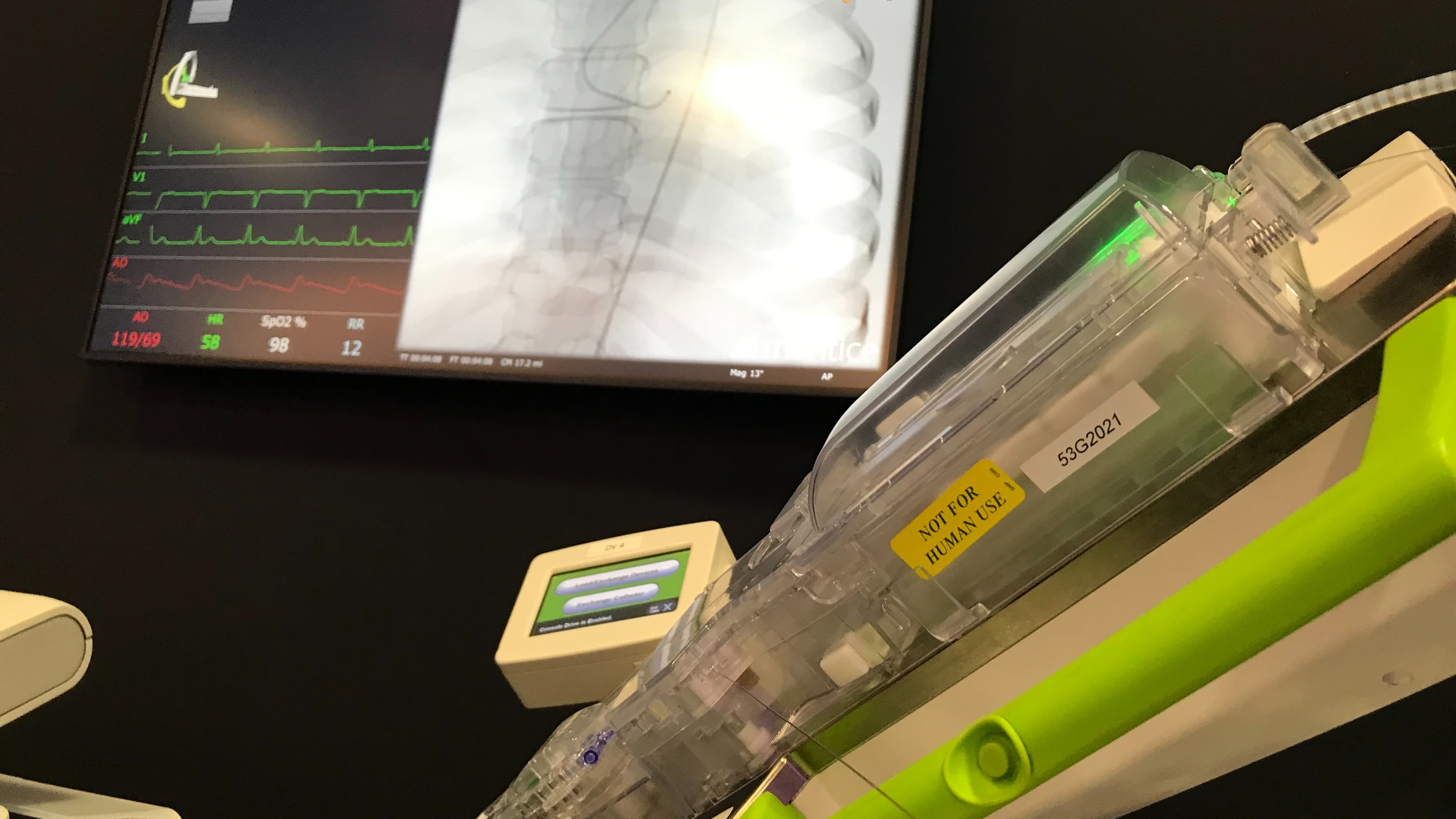
Siemens Healthineers has secured a federal award of up to $31.1 million over five years from ARPA-H to develop autonomous, remote endovascular robotics for treating acute ischemic stroke via mechanical thrombectomy, a procedure the company aims to eventually perform with no direct human operator involved. The system will combine a robotic catheter drive platform, autonomy-tuned endovascular devices, off-the-shelf fluoroscopic imaging, and a custom software layer for pre-operative planning and real-time navigation. With Siemens Healthineers contributing $5.4 million in cost-sharing, total program investment could reach $36.5 million. Stryker, Siemens Healthineers' neurovascular partner since 2025, is a sub-awardee, deepening a collaboration in which Stryker supplies neurovascular device expertise and Siemens Healthineers contributes robotics and imaging capability.
As an executive search partner to the MedTech industry, Guided Solutions keeps a close eye on stories like this one. Subscribe to our Industry Insights for weekly coverage.
This award is notable for what it signals about strategic direction and risk appetite. Siemens Healthineers walked away from robotics once already, shuttering the Corindus platform in 2023 after a $1.1 billion acquisition failed to deliver commercially viable results in cardiology. Returning to interventional robotics via neurovascular stroke care, backed by non-dilutive government funding and a partner (Stryker) with deep neurovascular commercial infrastructure, looks like a more disciplined second attempt: narrower clinical focus, shared cost burden, and a built-in distribution partner rather than a standalone acquisition to justify.
The ARPA-H AIR program itself is a signal worth watching independent. It reflects a policy bet that autonomous intervention (not just robotic-assisted, human-in-the-loop surgery) is becoming a near-term technical goal rather than a distant one, particularly for time-critical conditions like stroke where "door-to-treatment" delay is the primary driver of patient outcomes. For investors and competitors, the read-through is that remote/autonomous thrombectomy is being treated as a solvable access problem. Stroke centers and interventionalists are unevenly distributed, and autonomous or telerobotic systems could theoretically extend specialist-level care to underserved geographies. That's a large total addressable market argument, but also one with a long regulatory runway: autonomous intervention on human vasculature will face intense FDA scrutiny, liability questions, and clinical validation hurdles well beyond what assisted-robotics platforms encountered.
This sharpens the neurovascular robotics field forming around a few axes: Siemens Healthineers/Stryker's imaging-plus-device-plus-robotics stack, versus other players like AiM Medical Robotics (also a Siemens Healthineers collaborator, on MRI-guided neurosurgery) building adjacent capabilities. Given the AIR program's design-stage funding, near-term financial impact for Siemens Healthineers or Stryker shareholders will be negligible; the value is optionality: positioning both companies early in a technology transition that, if clinically successful, could reshape how stroke care is delivered outside major urban centers over a 5-10 year horizon rather than the life of this grant.