Latest Medtech News
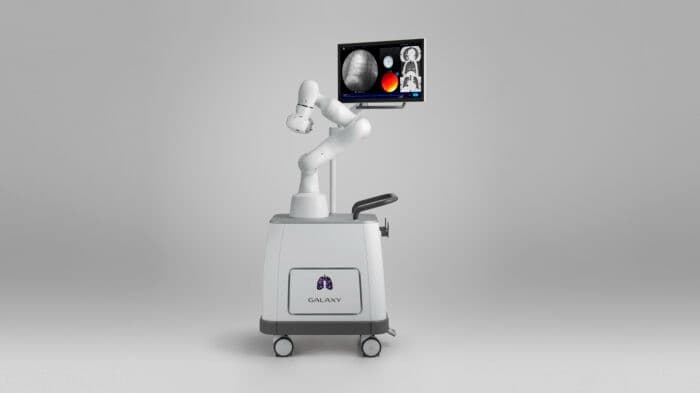
Noah Medical has launched Galaxy II, updated software for its Galaxy robotic-assisted bronchoscopy platform used to biopsy small, hard-to-reach lung lesions. The system's core feature is Dual-Mode Imaging, letting physicians switch between High-Definition Digital Tomosynthesis and Cone-Beam CT mid-procedure, along with a Lesion Focus tool designed to reduce imaging artifacts around the target lesion.
As an executive search partner to the MedTech industry, Guided Solutions keeps a close eye on stories like this one. Subscribe to our Industry Insights for weekly coverage.
The update targets two persistent problems in lung biopsy: CT-to-Body Divergence, where a patient's anatomy shifts from what the preoperative CT scan showed, and Tool-Tissue Divergence, where the biopsy tool drifts off path even with the catheter correctly positioned. Noah Medical says Galaxy II addresses both by combining navigation, imaging, and real-time confirmation in one system. In the multicenter MATCH II study, real-time lesion localization supported a 96.7% diagnostic yield, and a separate Cleveland Clinic evaluation of 100 patients reported a 90% yield in routine use, according to the company.
Francisco Almeida, an interventional pulmonologist at City of Hope Cancer Center Atlanta, said the software "enhances navigation, imaging and confirmation in a single platform."
The launch also matters for what it follows. Noah Medical received an FDA warning letter in April 2025 after an inspection found manufacturing and quality-control issues with the Galaxy system, including reports of device buckling and a patient death during a Galaxy-assisted procedure that the company didn't report to the FDA within the required 30 days. It's not publicly clear whether that matter has been resolved. A software launch built around real-time tool tracking and diagnostic accuracy lands directly on the issues raised in that letter, though it doesn't address the manufacturing and reporting compliance questions on its own.